

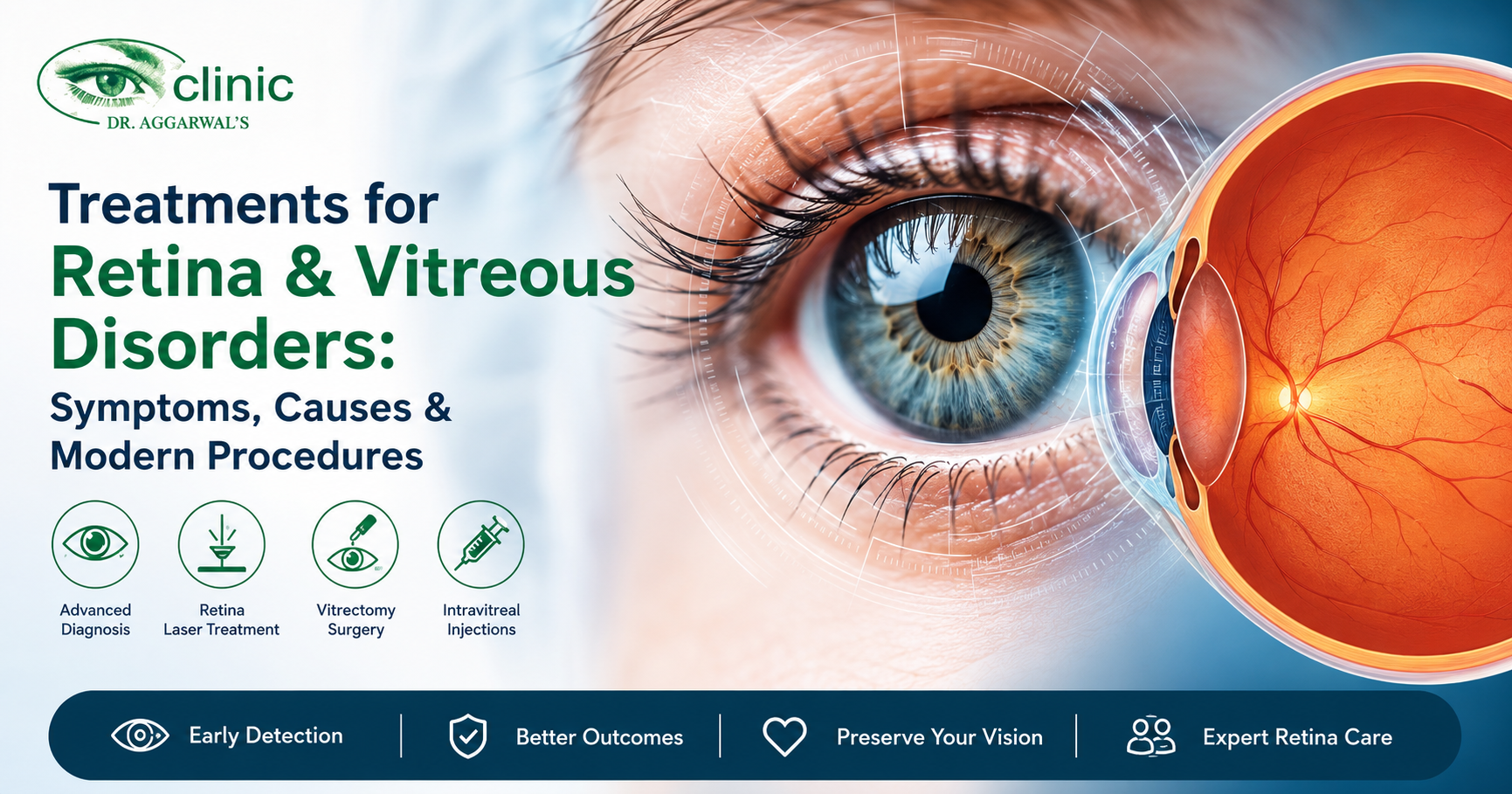
Retinal and vitreous vision issues may either be progressive or come out of the blue. Not attending to the initial signs can cause irreversible vision loss, and prompt diagnosis and supporting eye treatment are of utmost importance. Today, modern Treatments for Retina & Vitreous disorders have become safer, faster, and more effective with the help of advanced imaging, laser technology, and minimally invasive surgical procedures.
The sensitive layer of the eye at the back of the eye is known as the retina and is the part that makes the eye sensitive to light, whereas the clear gel that fills the inner section of the eyeball is the vitreous. Any eye damage or illness to these structures can have a devastating effect on the visual quality and sight.
Common Symptoms of Retina & Vitreous Disorders
Most retinal diseases are silent. Nevertheless, there are some red flags that one must not disregard.
Symptoms may include:
- Sudden flashes of light
- Floaters or black spots in vision
- Poor vision or clouded eyesight.
- Dark curtain-like shadow in the visual field
- Problem with concentration or reading.
- Blindness.
- Reduced night vision
When any of these symptoms occur, it is possible to consult a Retina specialist in Delhi and avoid severe complications.
What Causes Retina & Vitreous Problems?
There are a number of factors that can cause retinal diseases and vitreous disorders. Age-related ones are some; the others are associated with medical conditions or eye injuries.
Common causes include:
- Diabetes-related eye damage
- High blood pressure
- Age-related retinal degeneration
- Trauma or damage to the eyes.
- High minus power- severe myopia.
- Tears or holes in the retina.
- Infections and inflammation
- Previous eye surgeries
Diabetics are more susceptible to retinal complications and may need frequent retinal screening and fundus examination Delhi services to monitor the problem in its early stages.
Types of Retina & Vitreous Disorders
1. Diabetic Retinopathy
Diabetic retinopathy is a condition caused by the destruction of retinal blood vessels by high blood sugar. It is considered one of the most common causes of blindness in adults.
Diabetic retinopathy treatment and early diagnosis can preserve sight and prevent future progression.
2. Retinal Detachment
It is a medical emergency in which the retina detaches from the back of the eye wall. Without immediate care, permanent blindness may occur.
The use of laser procedures, pneumatic retinopexy, and retinal surgery is a modern Retinal detachment treatment that depends on the level of severity.
3. Macular Hole & Macular Edema
Sharp central vision is under the control of the macula. This area may be swollen or have holes that make reading and recognizing faces difficult.
4. Vitreous Hemorrhage
Sudden floaters or blurred vision may be caused by bleeding within the vitreous gel. Diabetes and retinal tears are common causes.
5. Retinal Tears
Such small tears in the retina may, in the future, advance to retinal detachment.
Advanced Diagnostic Techniques
The imaging systems in modern eye hospitals are able to identify retinal diseases in an accurate and early manner.
Some of the most common retinal diagnostic tests are:
- Optical Coherence Tomography (OCT)
- Fluorescein Angiography
- Digital retinal imaging
- Ultrasound B-scan
- Dilated retinal examination
Thorough retina examination assists physicians in deciding the most appropriate Treatments for Retina and Vitreous disorders.
Modern Procedures for Retina & Vitreous Care
Ophthalmology has made tremendous progress, which has led to better results in treating the retina. The majority of the procedures are less invasive nowadays and have shorter healing periods.
Retina Laser Treatment
The retina laser treatment is usually applied to repair retinal tears, minimize the abnormal growth of blood vessels, and avoid retinal detachment.
Laser procedures are usually fast and painless, and are conducted on an outpatient basis.
Benefits of retinal laser procedures:
- Minimally invasive
- Quick recovery
- Helps to avoid additional retinal damage.
- Works well in diabetic retinal diseases.
Vitrectomy Surgery
Vitrectomy surgery is a sophisticated microsurgical technique to remove the destroyed vitreous gel and cure complicated retinal diseases.
This procedure is usually advised in:
- Vitreous hemorrhage
- Retinal detachment
- Macular hole
- Severe diabetic eye disease.
Vitrectomy in the modern era involves the utilization of smaller instruments therefore causing less pain and quicker recovery.
Intravitreal Injections
Some eye diseases are treated by eye injections, which decrease the swelling and prevent the unwanted growth of blood vessels.
They find application in age-related macular degeneration and diabetic retinal disease through these injections.
Importance of Early Diagnosis
Retinal diseases tend to go undiagnosed. Loss of vision can be permanent due to the delay in treatment. The regular eye examinations become particularly important due to:
- Diabetic patients
- Senior citizens
- People with high myopia
- People who have a family history of retinal disease.
Periodic screening of the retina and early treatment can greatly enhance the success rate of treatment.
Tips to Protect Retinal Health
Having healthy eyes involves both preventive measures and routine checks.
Eye care tips:
- Control blood sugar and blood pressure.
- Avoid smoking
- Wear UV-protective sunglasses
- Consume omega-3-rich and leafy green foods.
- Arrange periodic eye examinations.
- Take urgent action when there are sudden visual changes.
Frequently Asked Questions (FAQs)
Q1. What are the early symptoms of retinal disorders?
Ans: Flashes, floaters, blurred vision, distorted image, and sudden loss of vision are common early signs.
Q2. Can retinal detachment be treated?
Ans: Yes. In most instances, treatment of early Retinal detachment can save or restore the eye’s vision.
Q3. What is the recovery time in vitrectomy surgery?
Ans: Depending on the type of treatment, recovery time may take a while, but the majority of patients report slow progress in a few weeks.
Q4. Does retina laser treatment hurt?
Ans: Laser procedures are comfortable and require minimum downtime and are done under local anesthesia.
Q5. Who must have regular retinal check-ups?
Ans: Individuals with diabetes, hypertension, high myopia, and elderly eye diseases are supposed to be screened periodically for their retina.
Conclusion
Retinal and vitreous disorders may be devastating to the eyes when not treated. Nowadays, however, ophthalmology has been developed to a very high level, and the diagnostic devices and minimally invasive surgeries have been developed that enhance the success and the healing process. Since there is early screening up to advanced Treatments for Retina and Vitreous disorders, early medical care is important in maintaining sight and eye health in the long term.
Early detection of the issues and preserving your vision in the future can be achieved with the help of consulting an expert in the field of retina and arranging regular retinal tests.